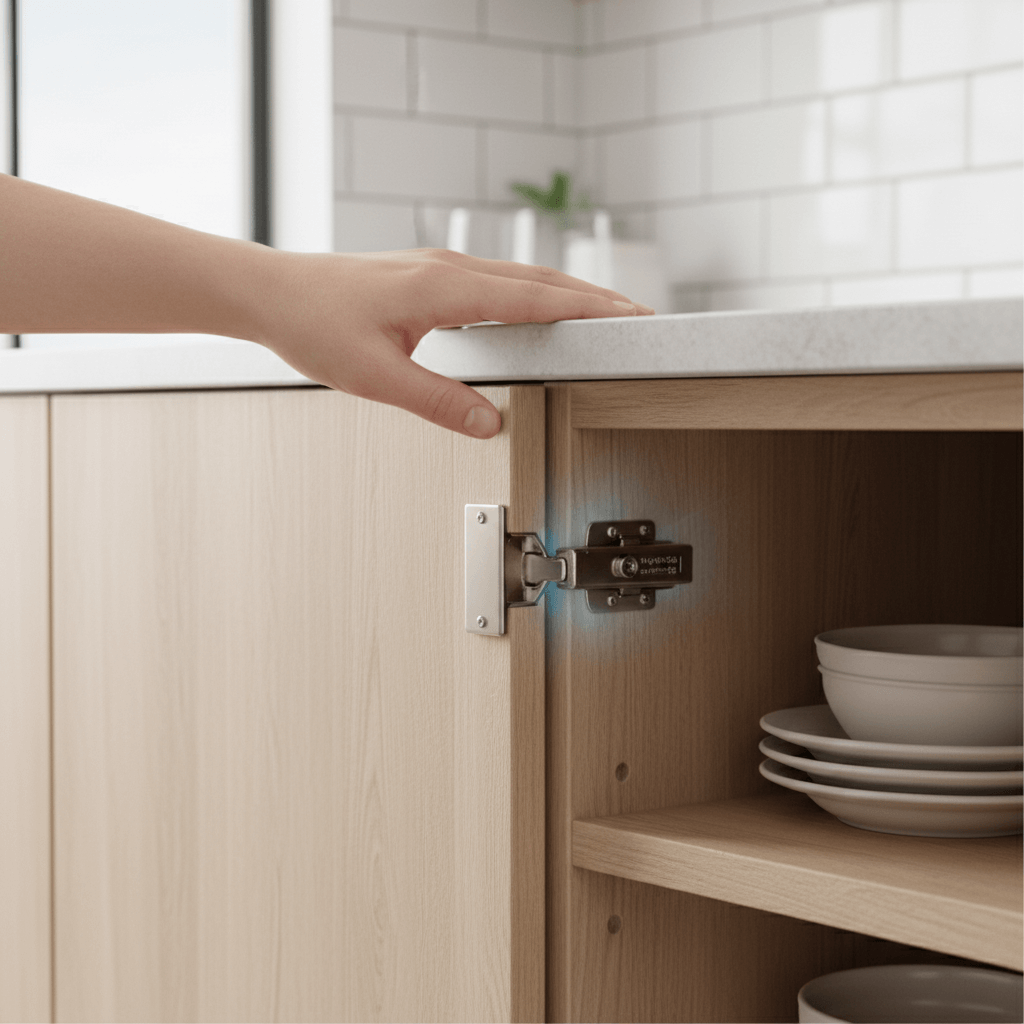
Soft Close Hinge Function
Soft close hinge function has become a common expectation in modern cabinetry. Homeowners notice the difference the first time a door glides gently to a close rather than slamming shut. This quiet, controlled motion is not just a luxury detail. It protects finishes, reduces noise, and extends the life of hinges and doors.
In this article I will explain how soft close hinges work, compare types, offer practical tips for selection and installation, and cover routine care and troubleshooting. Whether you plan a full cabinetry upgrade or a simple retrofit, the information here will help you pick the right hinge and get predictable results.
How soft close hinge function works and the main components
At the heart of the soft close hinge function is a damping mechanism that slows the door in its final travel. Two core elements make this work together. One element provides the closing force so the door moves toward the frame. The other element resists that closing motion at the end of travel.
Dampers and springs
Most soft close hinges use a small hydraulic damper filled with viscous fluid. As the door approaches the closed position, a piston within the damper forces fluid through a narrow passage. That restriction converts kinetic energy into heat and slows the motion. A spring or hinge geometry supplies the closing push so the damper handles only the last few degrees of movement.
Integrated vs add-on damping
Some hinges have the damper built into the hinge cup or arm. Others use clip-on dampers that attach to the door or the cabinet frame. Integrated units are more compact and look neater. Clip-on dampers are useful when you want to retrofit existing hinges without replacing them entirely.
Common hinge styles that incorporate soft close function
Understanding hinge types helps you match form and function. Typical styles you will encounter include cup hinges, inset hinges, and specialty overlays. Choosing a hinge style affects how the door sits, how it closes, and what mounting hardware you need.
- European cup hinges Also known as concealed hinges, these mount inside a cup bored into the door. They provide a clean look and adjustable alignment.
- Partial or full overlay hinges These control how much of the cabinet frame the door covers. Soft close versions exist for both overlay types.
- Inset hinges Designed for doors that sit inside the cabinet frame. Soft close inset hinges need careful adjustment because the door fits close to the carcass.
Benefits of soft close hinge function for everyday use
Investing in soft close hinges yields several measurable improvements in daily life. They reduce noise during busy mornings, decrease wear on cabinetry, and make homes safer for children and older adults. The slow final motion prevents sudden pinches and limits repeated impact stress on screws, hinges, and door edges.
- Noise reduction leads to a calmer household environment.
- Less mechanical shock means longer lasting cabinet finishes and joinery.
- Safer operation reduces the risk of finger injuries on heavy doors.
- Many homeowners notice a perceived increase in quality when entering a kitchen with soft close doors and drawers.
Choosing the right soft close hinge function for your project
Selecting the correct hinge requires attention to a few practical details. Factors include door thickness, overlay geometry, hinge cup diameter, and whether the cabinet has frameless or face framed construction. Budget and whether you plan a full hinge replacement or a retrofit kit also matter.
- Measure door thickness and confirm cup dimensions before ordering hinge assemblies.
- Match overlay specifications to preserve spacing and gap lines between doors.
- For frameless cabinets select hinges designed for full cup mounting. For face framed cabinets pick hinges with the correct mounting plate height.
- Consider soft close tension adjustment if your doors are heavy or particularly large.
Installation and retrofit options for soft close hinge function
There are two main paths to add soft close to your cabinets. One path is to replace existing hinges with integrated soft close models. The other path is to add clip-on dampers to the doors that already have standard hinges. Each path has advantages and trade offs for time, expense, and finish.
Tools and basic steps for hinge replacement
- Screwdriver set, power drill, and appropriate drill bits
- Hinge template or jig for consistent cup placement
- Replacement hinges matched to door cup size and overlay type
- Procedure summary
Remove the door from its hinges and set it on a stable work surface. If replacing cup hinges, remove the old hinge cup and confirm the cup hole is clean. Use a template to place the new hinge cups in identical positions. Attach the hinge arms to the cabinet mounting plates. Rehang the door and adjust the built in adjustment screws until gaps are even and the door closes with the desired slow motion.
Clip-on damper retrofit tips
Clip-on dampers are useful when cup relocation is not practical. Mount the damper on the cabinet frame or the hinge arm following the maker s instructions. Many clamp style dampers are nearly invisible when the door is closed. Check closing speed and tweak positioning by moving the damper slightly toward or away from the hinge pivot.
When in doubt a skilled local cabinet shop can evaluate your doors and recommend the least invasive route. For residents in the Orlando area, Orlando Custom Cabinets can provide options and professional installation to match your cabinetry and layout.
Adjustment tips to get the best soft close hinge function
Once the hinge or damper is installed, fine tuning matters. Many soft close hinges offer three axis adjustment. One screw moves the door left or right. One screw moves the door in and out. One screw moves the door up or down. Adjust these gradually and check the closing action after each small change.
- If the door still slams, move the damper slightly closer to the hinge pivot or reduce the closing force if the hinge allows.
- If the door stalls before fully seating, increase closing force or move the damper away from the pivot.
- For inset doors adjust to remove any rubbing against the frame.
Maintenance and troubleshooting common problems
Soft close hinges are low maintenance, but occasional checks will keep them operating well. Dirt and grit can shorten damper life. Lubrication is rarely necessary with hydraulic dampers, and oil based lubricants can damage seals. If a hinge is noisy or fails to close, inspect for visible damage and verify mounting screws are tight.
- Loose screws can cause misalignment and uneven closing.
- Cracked plastic parts on cheap dampers should be replaced rather than repaired.
- If a damper leaks oil it should be swapped out because seals are compromised.
- Replacing a single damaged hinge may require minor readjustment of adjacent hinges to maintain consistent gaps.
Cost, warranty, and value considerations for soft close hinge function
Price points vary from low cost clip-on dampers to premium integrated hinge sets. Expect to pay more for brands that include heavy duty dampers, better metal finishes, and comprehensive adjustment range. Many manufacturers back their hinges with multi year warranties that cover manufacturing defects.
- Clip-on retrofit kits are the least expensive route to add soft close.
- Integrated hinges often cost more but provide a cleaner appearance and usually last longer.
- Factor labor costs if you hire a professional. Professional installation yields consistent gap alignment and reduces the chance of rework.
Value is not only purchase price. Consider the reduction in repair needs from less slamming and the perceived upgrade when selling a home. Soft close doors are frequently listed as a selling point in home listings for kitchens and bathrooms.
Soft close hinge function is a small mechanical improvement that delivers noticeable daily benefits. From reducing noise to protecting cabinet surfaces, it is an upgrade with clear practical outcomes. Whether you choose an add-on solution or full hinge replacement, focus on hinge compatibility with your doors, minor adjustment after installation, and simple maintenance to keep the system working for years.
If you are unsure which hinge fits your doors or prefer professional fitting, consult a local cabinet shop for an on site evaluation. A professional can measure, recommend model numbers, and install hinges so that door gaps and closing action are uniform across a kitchen or bath. Taking that step saves time and avoids frustration when multiple doors need consistent alignment.
Ready to upgrade the feel and function of your cabinetry. Start by identifying the hinge type used on your doors and measure cup diameter and door thickness. Decide whether a clip-on retrofit or integrated replacement makes sense. If you want professional help contact a reputable local provider to get a quote and timeline. A modest investment in soft close hinges will pay back in quieter operation and longer lasting fixtures.